Book Your Painting Estimate Today
Protect Your Deck and Fence From Florida Weather
Your deck and fence face constant assault from Florida’s intense sun, humidity, and seasonal storms. Without proper protection, wood deteriorates quickly, fading to gray and becoming vulnerable to rot and splintering. Deck and fence staining seals and protects your outdoor wood while restoring its natural beauty or transforming it to a fresh new color. The stain penetrates the surface, creating a barrier against UV damage and moisture that extend the life of your investment. In Kissimmee, where summer heat and afternoon thunderstorms are relentless, this protection isn’t optional, it’s essential. Proper staining keeps your deck safe for barefoot walks and your fence standing strong against Florida’s demanding climate for years to come.
Deck Fence Staining That Seals and Protects Year-Round
Stain Application Built for Florida’s Tough Climate
Deck and fence staining creates a protective seal that penetrates wood fibers to shield against moisture, UV rays, and temperature fluctuations while enhancing the natural grain or adding color. In Kissimmee, where afternoon thunderstorms dump rain on wood surfaces already weakened by relentless sun, staining is the frontline defense that keeps outdoor structures functional and attractive. The stain forms a barrier that repels water before it can seep into wood cells, where it causes swelling, cracking, and eventual rot. UV inhibitors in quality stains block the sun’s bleaching effect, preventing the silver-gray fade that signals wood degradation.
The staining process begins with thorough surface preparation. Pressure washing removes dirt, mildew, and old finish, while sanding smooths rough spots and opens pores for maximum stain absorption. Any loose boards are secured, and gaps are addressed before application. The stain itself can be transparent to showcase wood grain, semi-transparent for subtle color with visible texture, or solid for complete color coverage and maximum protection. Application follows manufacturer specifications for temperature and humidity, typically requiring two coats with proper drying time between layers.
Florida’s climate demands reapplication every two to four years, depending on sun exposure and foot traffic. East-facing decks bake in morning sun; fences near St Cloud or Lake Nona face salt-laden air that accelerates wood breakdown. Regular staining prevents the splintering that makes decks unsafe for children and pets, maintains your property’s curb appeal, and saves money by postponing costly wood replacement for years or even decades.
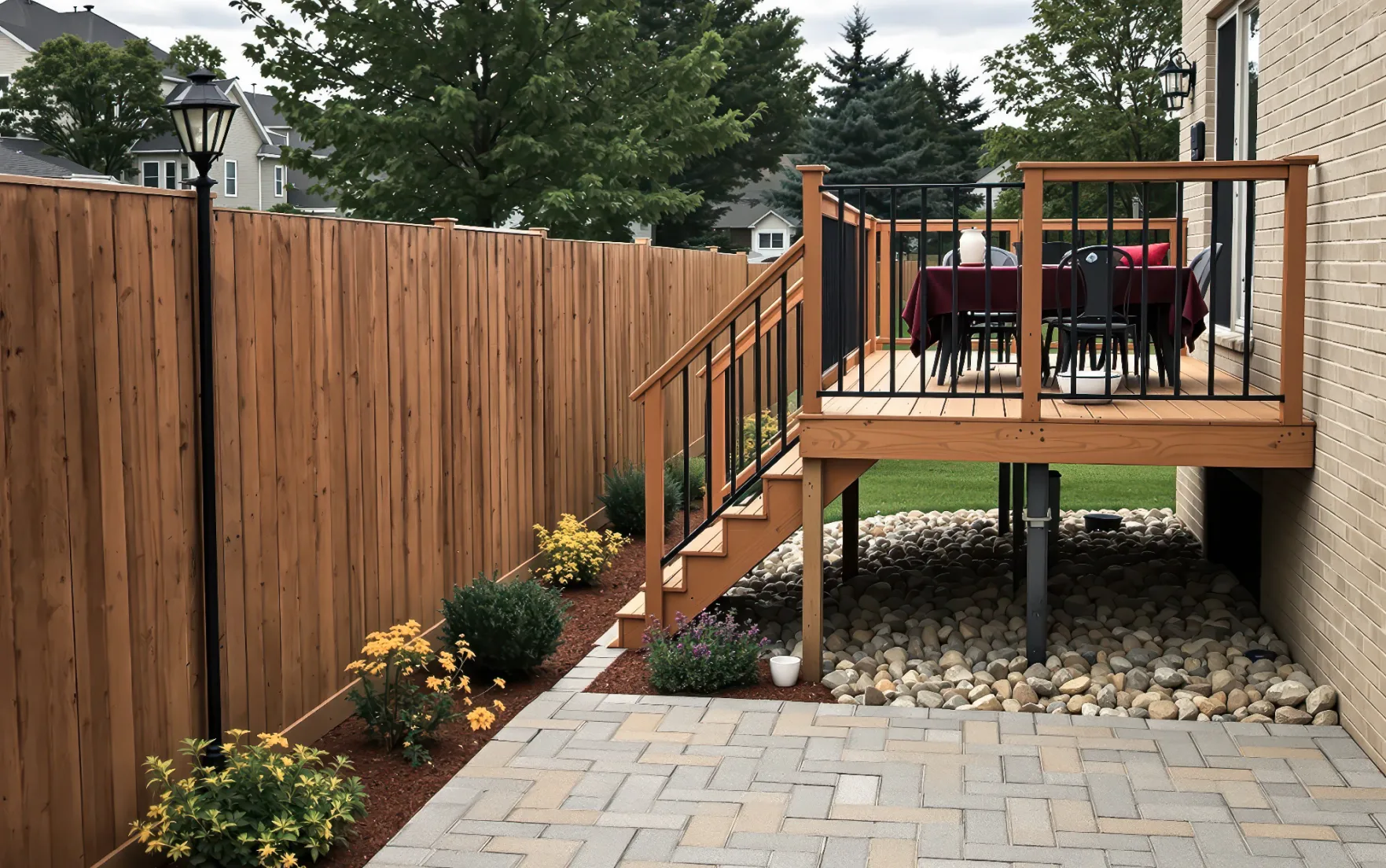
Steps That Make Deck and Fence Staining Last Longer
The difference between a deck that weathers gracefully and one that splinters within two years often comes down to preparation and product choice. Kissimmee’s combination of intense UV exposure and afternoon downpours demands stains formulated to breathe while blocking moisture, allowing wood to expand and contract without trapping water beneath the surface. Skipping moisture testing or applying stain over dirt and mildew creates a false barrier that peels away in sheets, leaving wood more vulnerable than before. Proper deck and fence staining includes cleaning to bare wood, sanding rough grain, and selecting a stain opacity matched to your wood’s age and condition. Transparent stains showcase natural grain on newer cedar or redwood; solid stains refresh older pressure-treated lumber while delivering maximum UV blocking. The right preparation and product selection extend protection from two years to four or more, reducing the frequency and cost of future maintenance.
Key Steps That Deliver Lasting Protection and Appearance
- Surface Preparation: Pressure washing removes old finishes, dirt, and mildew that prevent stain adhesion and compromise coverage quality.
- Moisture Testing: Wood must reach optimal dryness before application to ensure penetration and prevent peeling or blistering as temperatures climb.
- Stain Selection: Choose from transparent, semi-transparent, or solid options based on wood condition, desired appearance, and level of UV protection needed.
- Even Application: Brush, roll, or spray techniques distribute stain uniformly across boards, rails, and vertical fence pickets for consistent color and protection.
- Multiple Coats: Two-coat systems provide deeper penetration and longer-lasting defense against moisture intrusion and sun damage.
- Drying Time: Florida humidity requires extended curing periods between coats to lock in protection and prevent premature wear from foot traffic or rain exposure.
Protect Your Investment Before It’s Too Late
Contact us today to schedule your free staining quote and take the first step toward outdoor structures that look better and last longer.